- Home
- Beginner Pottery Problems
Beginner Pottery Problems (Why Clay Won’t Center and Walls Wobble or Collapse)
TL;DR
If your clay won’t center, wobbles, flies off the wheel, or collapses, the issue is almost never strength or talent. It’s usually body position, a missed step in the process, or a small mistake. Fix those, and pottery starts to feel stable and predictable.
Why Pottery Feels So Frustrating at First
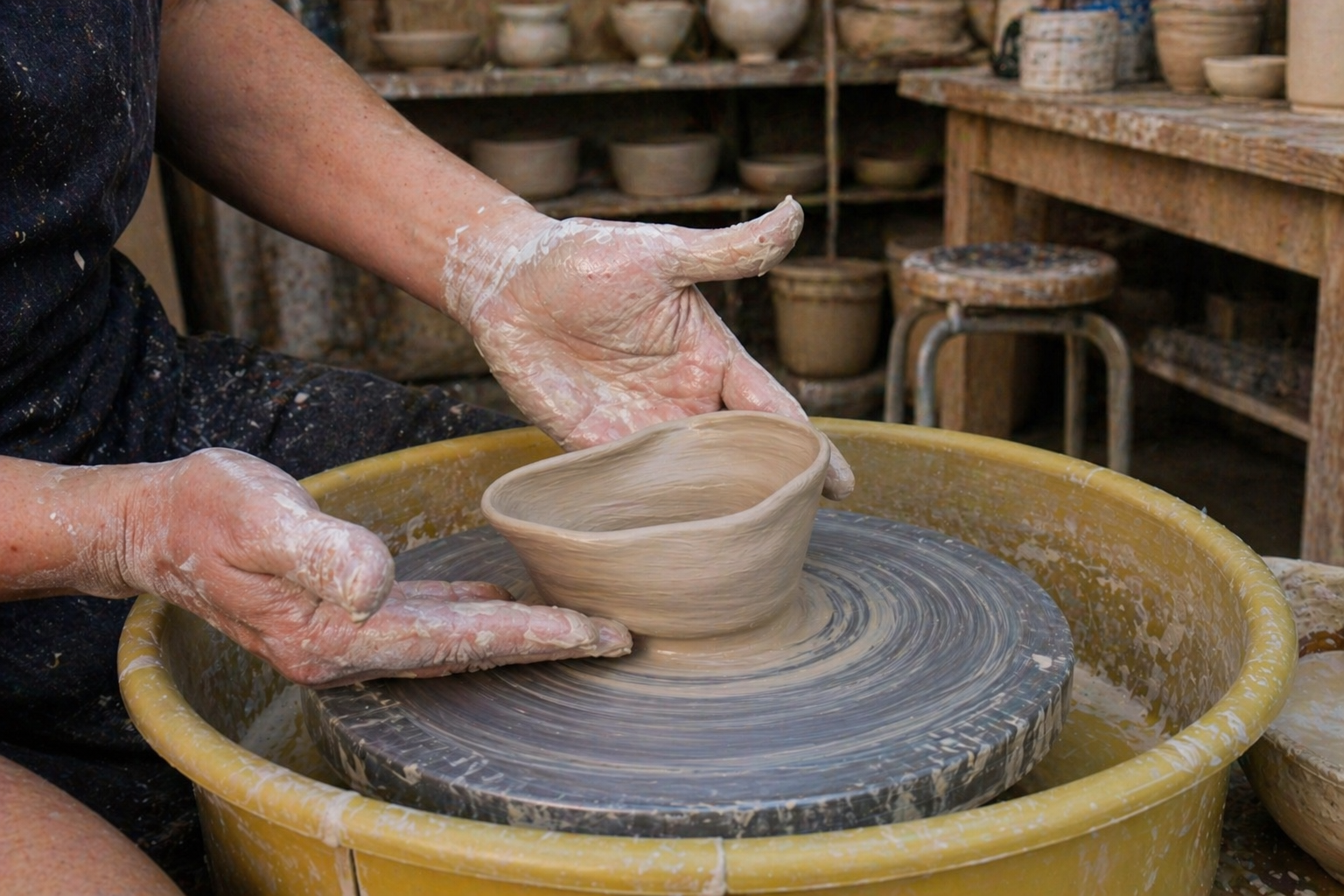
You sit down at the wheel expecting it to make sense.
Instead:
- The clay won’t stay centered
- Your hands lose control
- The walls collapse just when things look good
It feels random. Like sometimes it works, sometimes it doesn’t.
But it’s not random.
Most beginners are repeating one or two small mistakes without realizing it. And those mistakes show up as wobble, collapse, or loss of control.
The good news is that these problems are not mysterious. They are mechanical. Which means they can be fixed.
Start Here: Find What Matches Your Problem
Clay Won’t Center or Keeps Wobbling
This is the most common frustration.
What it usually feels like:
- The clay shifts under your hands
- No matter what you do, it wobbles
- It looks centered for a moment, then starts wobbling again
What’s actually going wrong:
- Your arms aren’t anchored to your body
- Your hands aren’t working as one unit
- The pressure you’re applying changes without you noticing
What to focus on:
- Brace your elbows firmly into your body
- Keep your hands connected so they move together
- Apply slow, steady pressure instead of chasing the wobble
When your body becomes stable, the clay follows.
Clay Flying Off the Wheel
This one feels dramatic, but the cause is simple.
What it usually feels like:
- The clay suddenly shifts or slides
- In some cases, it comes off the wheel
What’s actually going wrong:
- The clay wasn’t fully sealed to the wheel
- There might have been water under the clay
What to focus on:
- If it's wet, dry off the wheel head thoroughly with a dry towel
- Press the clay very firmly onto the wheel at the start
- Using a little water and your finger, seal the edges down to the wheel
This isn’t about using more force. It’s about creating a solid connection from the beginning.
Walls Wobble or Collapse
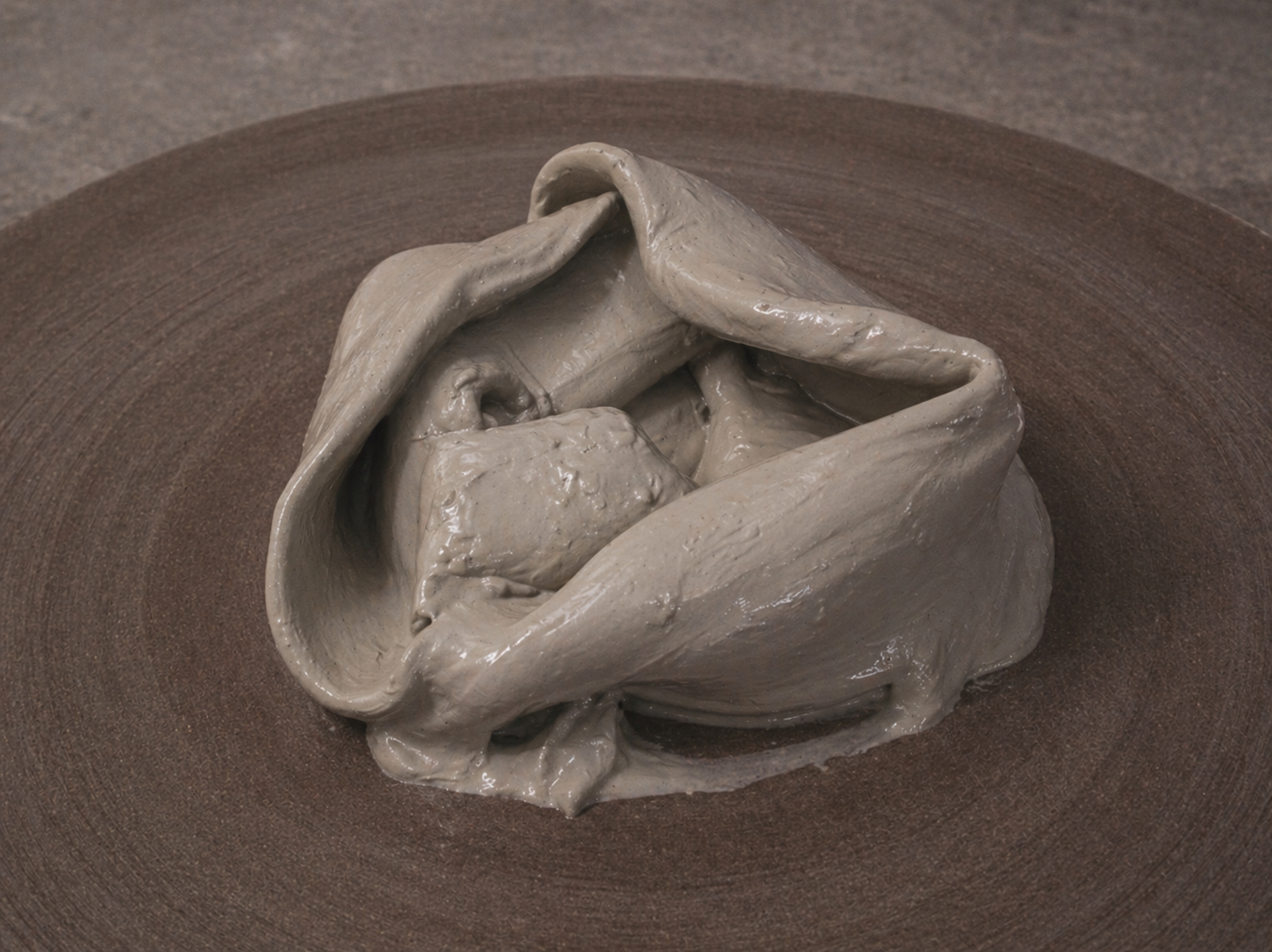
This is where things start to feel discouraging.
What it usually feels like:
- The walls get thin and then give out
- The shape starts to twist or wobble
- A piece that was looking good suddenly collapses
What’s actually going wrong:
- The walls are thinner in one spot than another
- Pressure is being applied too high up
- The shape is asking more of the clay than it can support
What to focus on:
- Keep the wall thickness even from bottom to top
- Be aware of how much pressure you apply as the clay spins (you have to use lighter and lighter pressure as you move up the wall)
- Continue to brace your arms into your body
- Keep your thumbs connected so your hands stabilize each other
- If your clay is soft, don't attempt wide bowls or very round vases
In this stage, continue to maintain good body position and begin to focus on slowing down the wheel speed, and the pressure and speed of your hands.
Trouble Pulling Walls Up
Getting height is less about effort and more about control.
What it usually feels like:
- The clay stays low and thick
- It starts to wobble as the walls get higher
- The walls don’t rise evenly
What’s actually going wrong:
- Pressure isn’t consistent from bottom to top
- Your hands separate or drift during the pull
- Parts of the wall are getting dry and your hands are sticking
What to focus on:
- Keep your ams braced and your hands connected and moving together
- Start at the bottom with firm pressure and lighten the pressure more and more as you continue up the wall
- Slow the wheel down to give you more control
- Stop every 5-10 seconds and reapply water evenly to the walls
Height comes from slow control, not speed or force.
Too Much or Too Little Water
Water can be challenging because it changes quickly.
What it usually feels like:
- Too much water makes everything feel messy and it causes cracks after drying
- Too little water makes the clay feel sticky, so it gets over-thinned and twisted
What’s actually going wrong:
- Too much or too little water are both big problems
What to focus on:
- Use enough water to reduce friction (add small amounts frequently and in the spots where you are working)
- Not so much that you soak everything including your neighbor
SMALL AMOUNTS of water FREQUENTLY and in the RIGHT SPOT is the formula
The Patterns That Cause All the Problems
Across all of these problems, the same three things show up again and again:
- Lack of stability and bracing
- Inconsistent pressure
- The wrong amount of water
When you fix those, pottery stops feeling unpredictable.
It starts to make sense.
A Simple Reset You Can Try Right Now
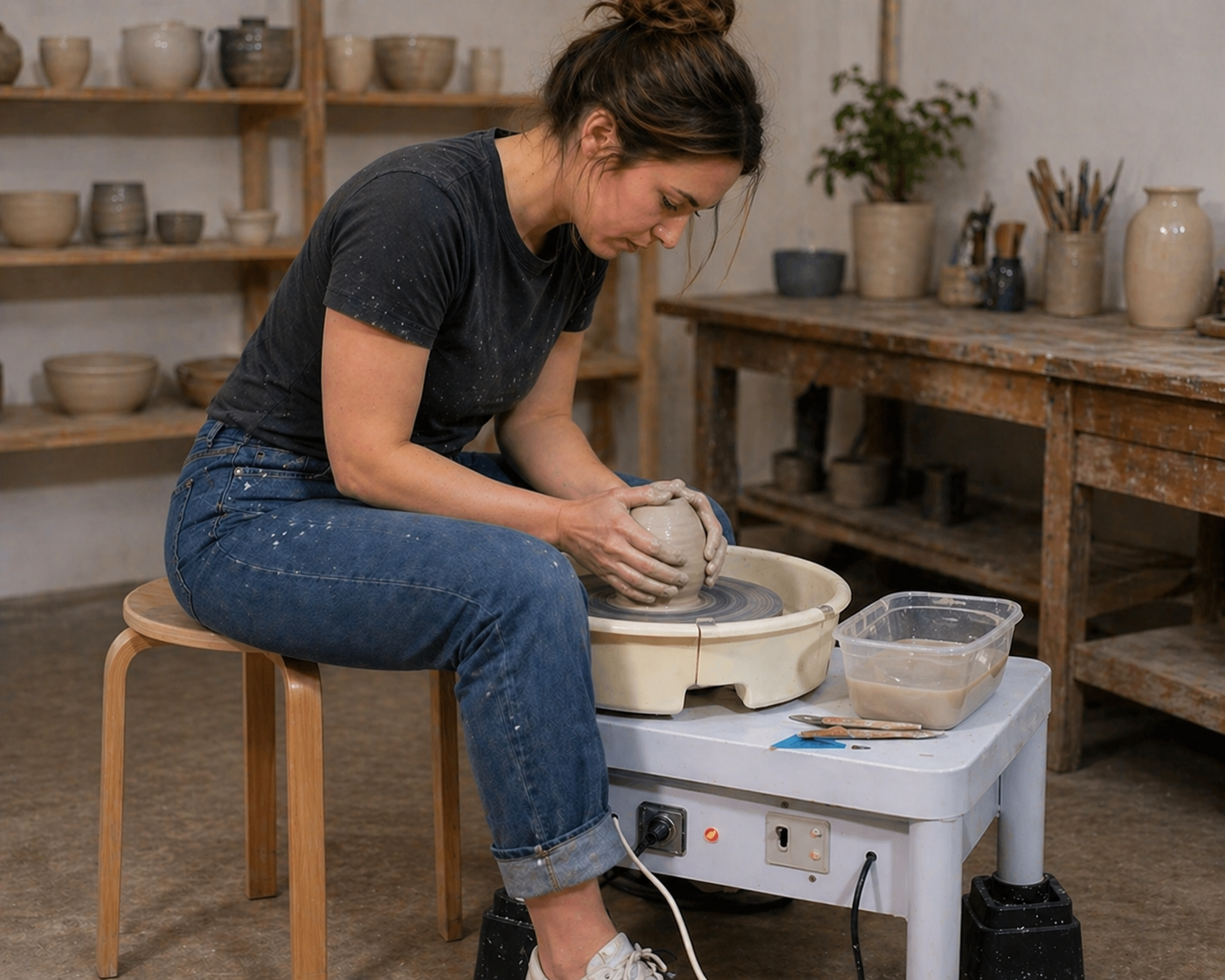
If things aren’t working, pause and reset:
- Bring your elbows into your body
- Connect your hands so they move together
- Stop frequently and add small amounts of water to where your hands are touching the clay
- Apply steady, even pressure
This alone fixes more problems than most people expect.
Where to Go Next
Once you’ve identified your main issue, the next step is to go deeper into that specific problem.
From here, you can explore:
- Centering fixes in detail
- How to keep clay attached to the wheel
- How to stop clay from wobbling
- How to prevent collapse
- The most common beginner mistakes and how to correct them
Want Help Fixing Your Exact Issue?
Reading helps, but pottery is physical. Small adjustments make a big difference, and they’re easier to see than to describe.
If you want faster progress, I offer a live troubleshooting class where I help you identify and fix your specific issue step by step.
If that sounds useful, you can learn more here:
The Pottery Fix
Final Thought
If pottery feels frustrating right now, you’re not alone.
You're also closer than you think.
The problem isn’t that you can’t do it.
It’s that something small is off.
Find it, and fix it, and things will start to click.


