- Home
- Throwing Videos
- Wheel Techniques
Step 5
Wheel Techniques:
Finishing the Floor of the Pot
This is one of the wheel techniques that is often neglected.
It's important, though, because a well-formed floor can create dramatic results for your pot.
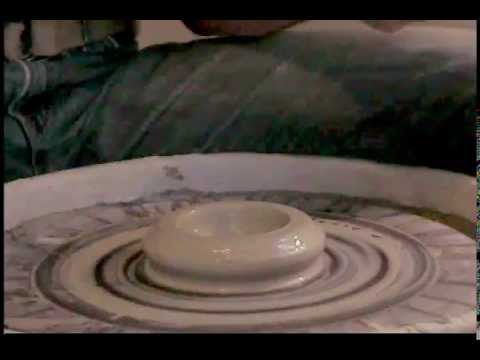
1) The Right Depth:
A thin floor is too fragile. A thick floor makes the pot too heavy.
A good rule of thumb is for the floor to be 1cm thick, or the thickness of your little finger.
Err on the thick side at first. As you improve you'll get a good sense of just the right thickness for each pot.
To measure the thickness of the floor, stop the wheel. Insert a needle tool (see ceramic supplies link) into the floor of the pot until it hits the wheel.
Don't worry about the hole. It will fill in on the next step.
Slide your index finger down the needle until it touches the clay. Keep your finger in place on the needle as you remove the needle tool from the clay.
The thickness of your floor is the distance between your finger and the tip of the needle.
2) Compress the Clay:
With the pottery wheel spinning slowly press down gently on the floor of the pot using a rib or a sponge.
Distribute the pressure evenly across the right half of the bottom.
This will strengthen it, thin it a little more (not too much!), and help prevent it from cracking.
A Note on Flooring: The floor is important regardless of what pottery design you are creating.
For instance, when looking at a ceramic mixing bowl, often the first thing you see is the inside.
With pottery dinnerware it is even more important. On a ceramic plate, the floor makes up most of the pot.
3) Shape and Smooth the Floor:
Finally, using the rib or sponge again, create a good shape to the floor.
Pay special attention to the transition between the floor and the wall.
For a pottery coffee mug you would likely want a more squared off corner.
However, for a pottery mixing bowl a rounded, gradual transition would be better.
In fact, with good pottery mixing bowls you can't see where the floor ends and the wall begins.
Great Job! Now we'll work on the next pottery wheel technique, Step #6,


